Muktinath Temple Nepal: A Sacred Place Where Two Faiths Meet the Sky
High in the Mustang valley at 3,800 metres, Muktinath Temple Nepal is a rare and sacred meeting point of Hindu and Buddhist devotion, surrounded by some of the most awe-inspiring scenery in the Himalayas.
A Sanctuary Above the Clouds
Perched at 3,800 metres above sea level in the remote Mustang valley, Muktinath Temple Nepal is one of the most profoundly sacred sites in the entire Himalayan world. Here, where the thin air carries the scent of incense and the sound of wind through prayer flags, two of Asia's great spiritual traditions converge in remarkable harmony. Hindu devotees and Tibetan Buddhist pilgrims alike make the arduous journey to this extraordinary place, drawn by centuries of faith, legend, and the promise of liberation.
The Meaning Behind the Name
Muktinath translates simply as "place of liberation." For Hindu pilgrims, the temple is counted among the 108 Divya Desams — the sacred abodes of Lord Vishnu — and visiting it is believed to cleanse the soul of sins and offer the gift of salvation. For followers of Tibetan Buddhism, the site holds equal reverence; the great teacher Guru Rinpoche is said to have meditated here, blessing the ground beneath the ancient shrine. This rare confluence of two faiths gives Muktinath Temple Nepal a spiritual depth that few places on earth can match.
The Sacred Complex: Water, Fire, and Stone
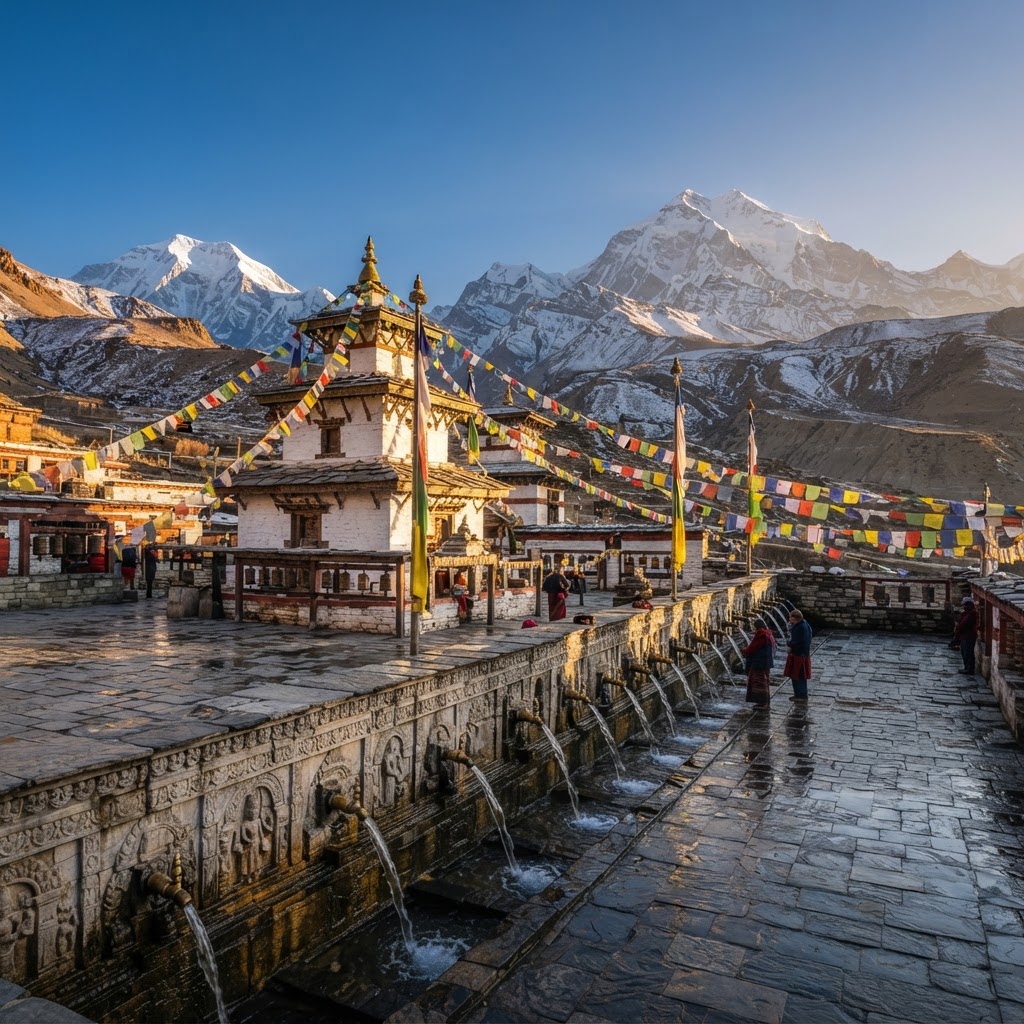
At first glance, the temple complex appears almost modest against the vast Himalayan backdrop. Yet every detail carries immense significance. The main shrine houses a life-size statue of Lord Vishnu, serene and watchful. Encircling it, 108 waterspouts carved in the form of cow heads pour streams of icy glacial water. Pilgrims immerse themselves beneath each spout in turn, believing the ritual purifies both body and spirit. Nearby, an eternal flame fed by natural gas burns beside a spring — a remarkable natural phenomenon that pilgrims interpret as the union of earth, water, and fire, the very elements of existence.
The Journey Through Mustang
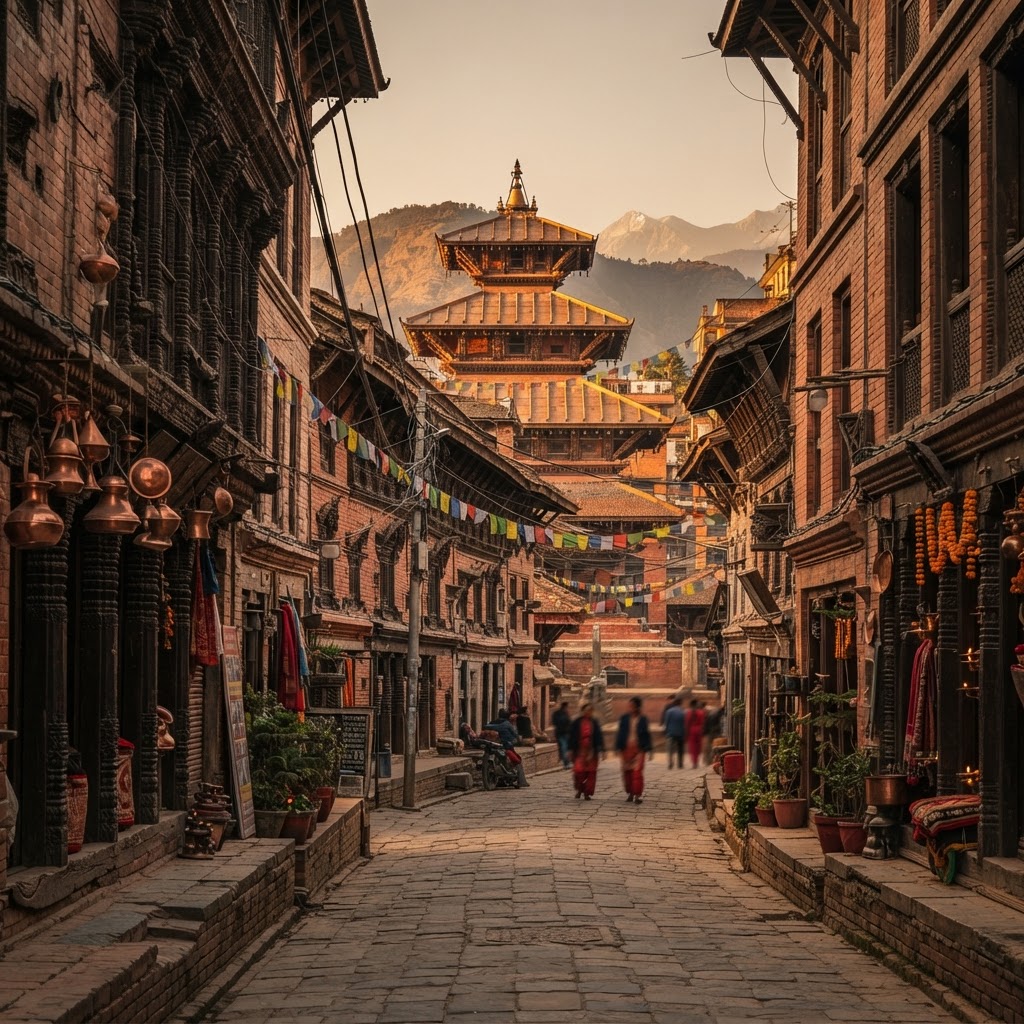
Within the Annapurna Conservation Area, the path to Muktinath is itself an act of devotion. Trekkers and pilgrims pass through wind-sculpted villages, ancient monasteries, and high desert landscapes that feel utterly removed from the modern world. Snow-capped peaks rise on every horizon, their scale both humbling and uplifting. The Mustang valley trekking routes that lead here are among the most dramatic in Nepal, rewarding every difficult step with scenery of breathtaking grandeur. Whether you arrive on foot over several days or by jeep along the mountain tracks, the final approach to the temple never fails to move.
A Living Place of Faith and Unity
Muktinath Temple Nepal is not a relic preserved behind glass — it is a living, breathing place of worship. Pilgrims travel from across South Asia, some covering enormous distances on foot, to seek blessings and find peace. Prayer wheels spin, butter lamps flicker, and the mountain air seems charged with something beyond the ordinary. The temple stands as a quiet but powerful statement: that belief, in its deepest form, transcends geography, hardship, and even the boundaries between faiths.
For culturally curious travellers seeking to experience one of the Himalayas' most meaningful spiritual destinations, a journey to Muktinath is unlike anything else Nepal has to offer. To start planning your own Himalayan pilgrimage, get in touch with Citibond Holidays and let our travel specialists help you craft an unforgettable itinerary.