Myanmar Culture and Traditions: An Immersive Guide for Curious Travellers
Myanmar's culture and traditions offer travellers an extraordinary window into a living, breathing civilisation — from the Bagan pagodas and Inle Lake crafts to Thingyan water festivals and the quiet rituals of Buddhist daily life.
Discovering Myanmar Culture and Traditions
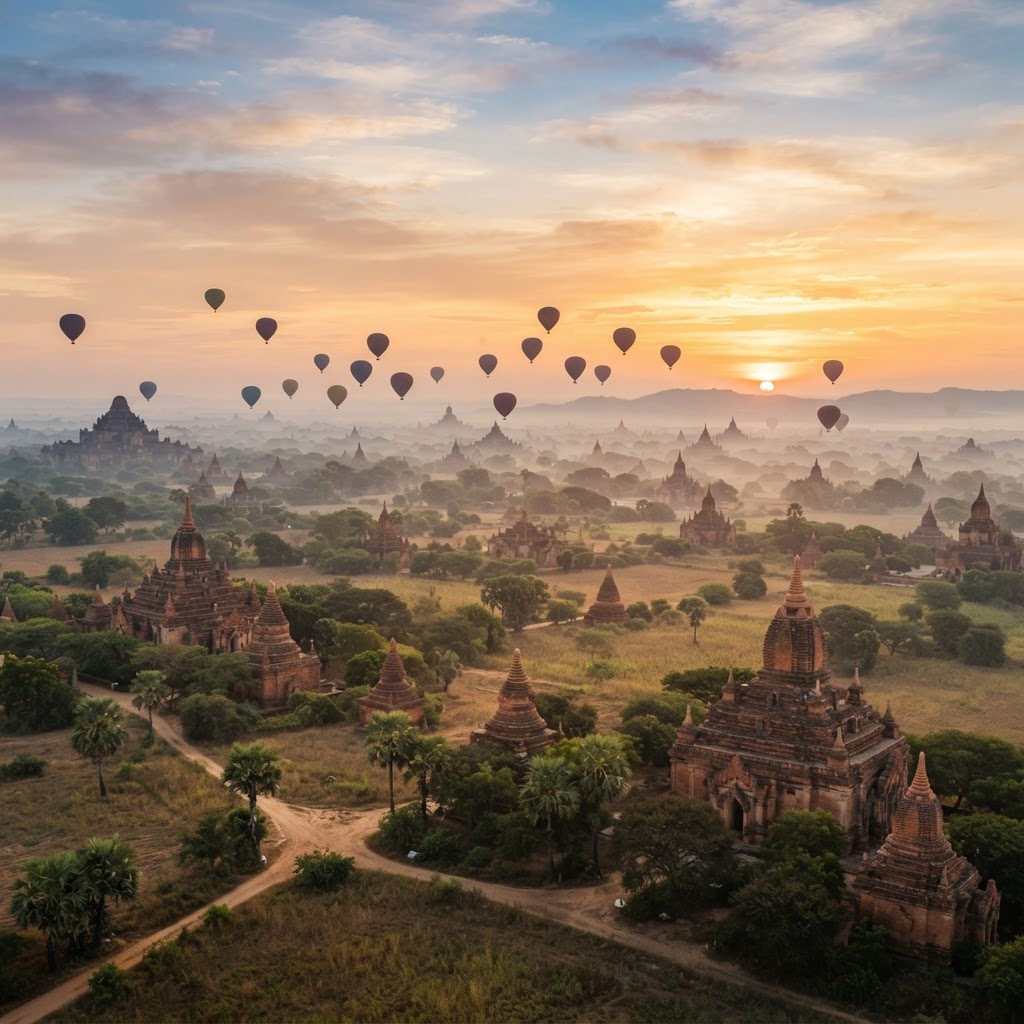
Few destinations in Asia reward the curious traveller quite like Myanmar. Its culture and traditions run deep, woven into every corner of daily life — from the gilded spires of the Bagan pagodas rising from the plains at dawn to the stilted villages drifting above Inle Lake. This is a country where ancient customs breathe alongside the present, and where visitors who arrive with respect and openness are welcomed into something truly extraordinary.
Buddhism at the Heart of Everyday Life
Myanmar's culture is inseparable from Buddhism, and nowhere is this more visible than at the country's pagodas. At the Bagan pagodas, home to over two thousand sacred structures, visitors are invited to participate — not simply observe. When circling a pagoda, always move clockwise, a simple but meaningful gesture of reverence that locals will notice and appreciate. Remove your shoes and socks before entering any temple precinct, and dress modestly with shoulders and knees covered.
In Yangon, the Shwedagon Pagoda stands as the spiritual heart of the nation. Arrive at dusk when candlelight flickers across the golden stupa and monks chant evening prayers — it is one of Southeast Asia's most atmospheric experiences.
One of the most moving cultural moments a traveller can witness is a novitiate ceremony, known as shinbyu, in which young boys are initiated as novice monks. Dressed in princely robes before donning the saffron robe, the ceremony is a profound rite of passage that underlines how central monastic life remains to Burmese society.
Festivals, Crafts and Living Traditions
Timing a visit to coincide with Thingyan — the Burmese New Year water festival, typically held in April — offers an unparalleled cultural immersion. Streets across the country erupt in joyful water fights as communities mark the passing of the old year and welcome the new. Far from a spectacle for visitors, Thingyan is an open celebration; joining in is not only acceptable, it is actively encouraged.
Beyond festivals, Myanmar's rural communities keep traditional crafts alive in ways that feel entirely authentic. Around Inle Lake, weavers practise the extraordinary technique of lotus silk weaving, drawing fine threads from lotus stems to create fabric of rare delicacy. Pottery, lacquerware and silverwork are similarly passed through generations, and visiting workshops gives real insight into the patience and skill these crafts demand.
Traditional dance performances — featuring elaborate gilded costumes and expressive, story-driven movement — can be found at cultural shows across the country, bringing folktales and historical legends vividly to life.
Dress, Food and Social Customs
Myanmar's traditional attire is a visible expression of cultural identity. Men wear the longyi, a length of cloth wrapped at the waist; women wear the htamein, a similarly elegant garment. Visitors who choose to wear one — widely available at local markets — often find it opens conversations and earns warm appreciation from locals.
Traditional food in Myanmar is characterised by honesty and simplicity. Meals centre on steamed rice, fragrant curries of chicken or fish, fermented tea leaf salad (lahpet thoke), and fresh market vegetables. Dining alongside locals at a simple tea house is one of the most genuine ways to experience Burmese hospitality — food here is always shared generously.
Planning Your Broader Asian Cultural Journey
Myanmar's rich cultural landscape is part of a wider tapestry of Asian heritage. If your curiosity extends across the region, the Vietnam and Cambodia Discovery offers 18 days exploring the ancient temple complexes of Siem Reap and the historic landmarks of Ho Chi Minh City — a natural companion to any deep dive into Southeast Asian culture. For those drawn to South Asian traditions, the South India Cultural Discovery spans 15 days, visiting UNESCO-listed Hampi and the magnificent Meenakshi Amman Temple in Madurai.
Myanmar's culture and traditions are not museum pieces — they are alive, generous and endlessly engaging. To start planning a culturally rich journey to this remarkable country, speak with the team at Citibond Holidays, who can help craft an itinerary that brings you closer to the real Myanmar.