Visiting Angkor Wat, Cambodia: History, Symbolism and Spiritual Wonder
Angkor Wat in Cambodia is the world's largest religious monument and a masterpiece of Khmer civilisation. Discover its history, symbolism and why a sunrise visit is unforgettable.
The World's Largest Religious Monument Awaits
Visiting Angkor Wat, Cambodia is one of those rare travel experiences that genuinely exceeds expectation. Rising from the jungle plains near Siem Reap, this extraordinary temple complex is the world's largest religious monument — a breathtaking fusion of spiritual devotion, artistic mastery and architectural brilliance that has endured for nearly nine centuries.
A Temple Born of Kings and Gods
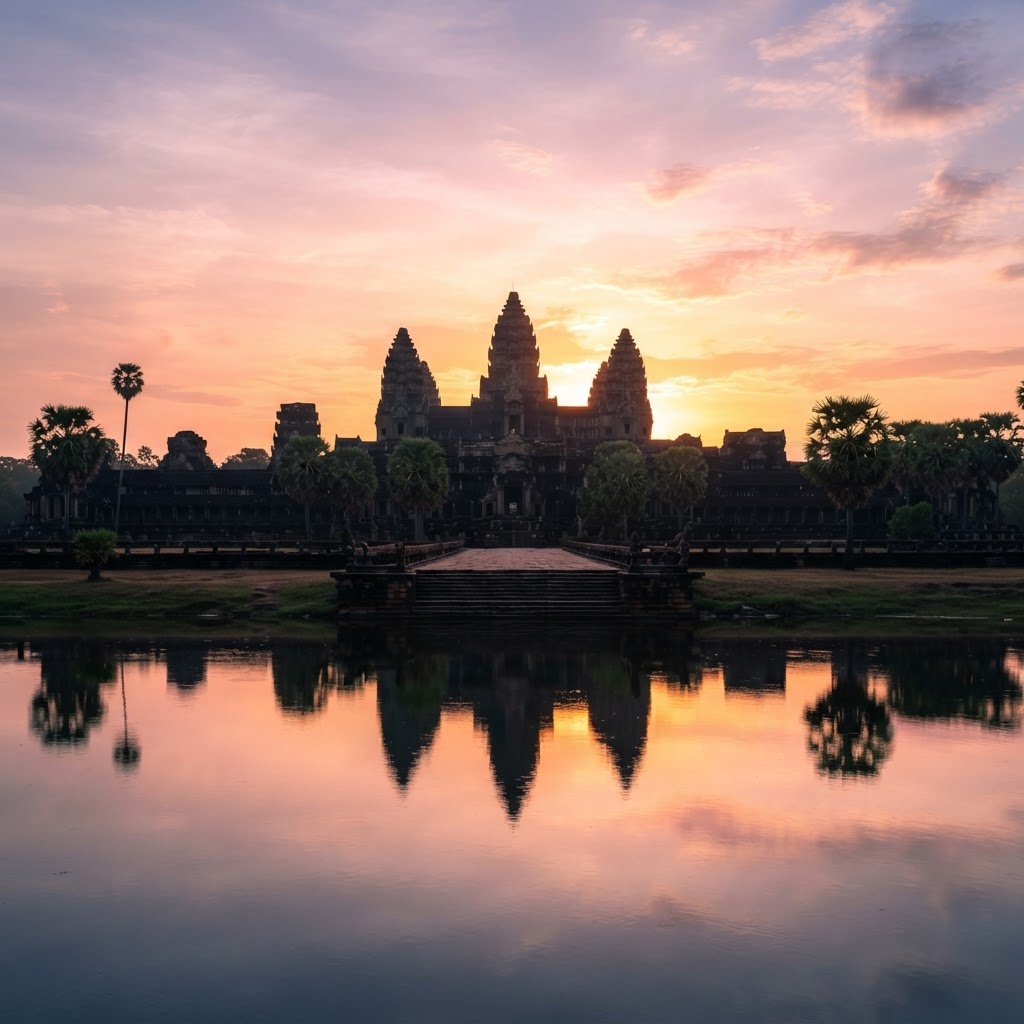
Angkor Wat history begins in the early 12th century, when King Suryavarman II commissioned this vast monument as a Hindu temple dedicated to Vishnu. At its heart, the design is deeply symbolic. The five iconic towers, each shaped like an unfurling lotus bud, represent Mount Meru — the sacred cosmic mountain at the centre of Hindu cosmology. The wide moat that encircles the entire complex represents the mythical oceans surrounding that divine peak. Nothing here was left to chance.
Over time, the temple evolved from a Hindu sanctuary into a Buddhist place of worship, a transition that gives Angkor Wat its layered spiritual character. Today, it remains an active site of pilgrimage and appears with quiet pride on Cambodia's national flag — a symbol of nationhood as much as faith.
Khmer Architecture and the Art of Stone
Spanning more than 400 acres within the wider Angkor Archaeological Park, the complex is arranged with a precision that continues to astonish architects and engineers alike. Vast galleries, open courtyards and soaring towers were constructed from enormous sandstone blocks, quarried and transported without the benefit of modern machinery.
The bas-reliefs that line the inner walls are equally remarkable. Stretching for hundreds of metres, these intricate carvings depict celestial battles, scenes from the Ramayana and Mahabharata, and vivid glimpses of everyday Khmer life. Far more than decorative art, they represent a civilisation's enduring record of itself — culture, belief and identity preserved in stone.
Legends persist that divine beings guided the hands of the Khmer builders. Whether or not one believes such stories, the sheer scale and skill of the achievement makes them entirely understandable.
The Angkor Wat Sunrise Tour
For many visitors, the most transformative moment of their Cambodia holiday comes before the heat of the day has even begun. An Angkor Wat sunrise tour, with the temple's silhouette slowly emerging from darkness and reflecting in the still waters of the moat, is an experience of rare, unhurried beauty. Mature couples in particular find these quieter early-morning hours — before the crowds gather — ideally suited to thoughtful exploration and genuine connection with the site.
Based in nearby Siem Reap, most visitors spend several days exploring not only Angkor Wat itself but the broader wonders of the Angkor Archaeological Park, including the atmospheric temple of Ta Prohm and the monumental faces of Bayon.
Plan Your Journey with Citibond Holidays
Angkor Wat is more than a destination — it is a profound encounter with human endeavour, faith and artistry that stays with you long after you return home. If you are considering a cultural journey to Cambodia, speak with the team at Citibond Holidays, who can help you arrange a tailor-made itinerary that places this timeless wonder at its heart.