Hawa Mahal Jaipur India: Your Complete Guide to the Palace of Winds
Rising above the pink-hued streets of Jaipur, Hawa Mahal – the Palace of Winds – is a breathtaking masterpiece of Rajput architecture and one of India's most iconic landmarks. Discover everything you need to know before you visit.
Hawa Mahal Jaipur India: A Palace Unlike Any Other
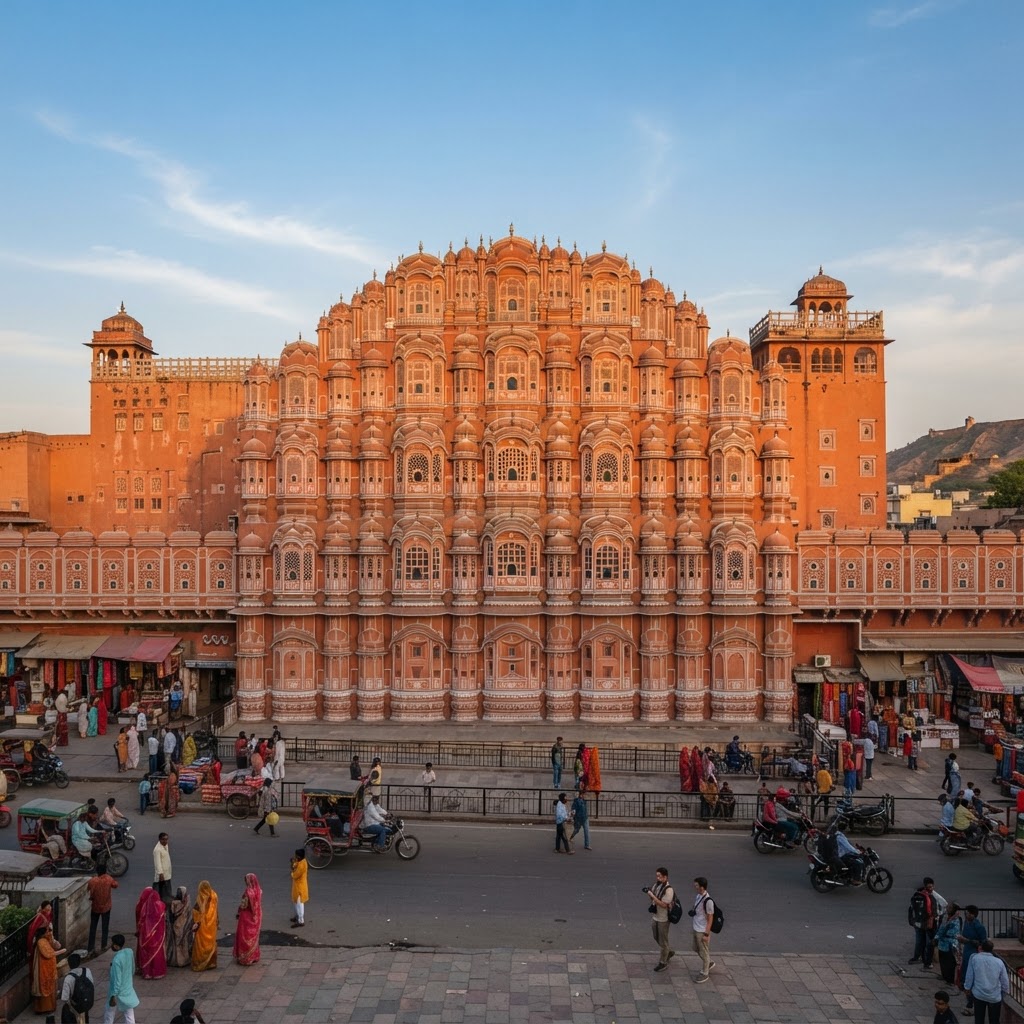
Rising five storeys above the bustling streets of Jaipur, Hawa Mahal – the Palace of Winds – is one of the most instantly recognisable landmarks in all of India. Built in 1799 by Maharaja Sawai Pratap Singh, this extraordinary structure was conceived as both a royal retreat and a symbol of Rajasthan's refined artistic tradition. Crafted from vivid red and pink sandstone, its façade resembles an elaborate honeycomb, and it remains one of the most photographed buildings on the subcontinent.
Architecture That Takes Your Breath Away
The Palace of Winds earns its name from its 953 intricately carved windows, known as jharokhas, which allow cool breezes to circulate throughout the building even on the hottest summer days. The latticework on each window is extraordinarily delicate, and the play of light and shadow through the screens creates mesmerising patterns inside. The design is a seamless blend of Hindu and Mughal architectural styles – a hallmark of the Rajput tradition – and every level of the palace reveals a distinct layout that rewards slow, curious exploration.
Historically, those elaborately carved screens served a very practical purpose: they allowed the royal women of the court to observe street festivals and processions below without being seen themselves, preserving both their privacy and the customs of the time.
Exploring the Palace Room by Room
As you step inside, spacious courtyards open before you. Climbing through each floor, the palace gradually reveals its secrets – ornate chambers, small alcoves and, finally, the rooftop terrace. From the top floor, the panoramic views across Jaipur are simply spectacular. You can pick out the grand City Palace Jaipur in the middle distance and the ancient astronomical observatory of Jantar Mantar – both UNESCO World Heritage Sites – making this vantage point as historically rewarding as it is visually stunning.
The Neighbourhood Around Hawa Mahal
One of the joys of visiting Hawa Mahal is that it sits at the heart of Jaipur's old city. After exploring the palace, you can wander directly into the surrounding bazaars, which are alive with traders selling handicrafts, jewellery, textiles and spices. The sensory experience of the streets here – colour, noise, fragrance – is very much part of what makes Jaipur so compelling, and it gives real context to the royal grandeur you have just admired.
Plan Your Visit to Rajasthan
Hawa Mahal is open daily, and the best light for photography falls in the early morning when the sandstone glows warm gold. Combine it with nearby City Palace Jaipur and Jantar Mantar for a deeply rewarding full day of Jaipur sightseeing. For those who want to experience Rajasthan's heritage more broadly, the Classic Rajasthan Tour (17 days, price on request) takes in Amber Fort, City Palace and much more across the region. Alternatively, the Golden Triangle With Ranthambore (8 days, price on request) includes a dedicated guided visit to Hawa Mahal itself, alongside the Taj Mahal and a comprehensive tour of Delhi. The Golden Triangle Tour (7 days, from £1,449) is a superb introduction to India's most iconic sights for first-time visitors.
Ready to experience the magic of Hawa Mahal and the treasures of Rajasthan for yourself? Get in touch with Citibond Holidays to start planning your tailor-made India itinerary.